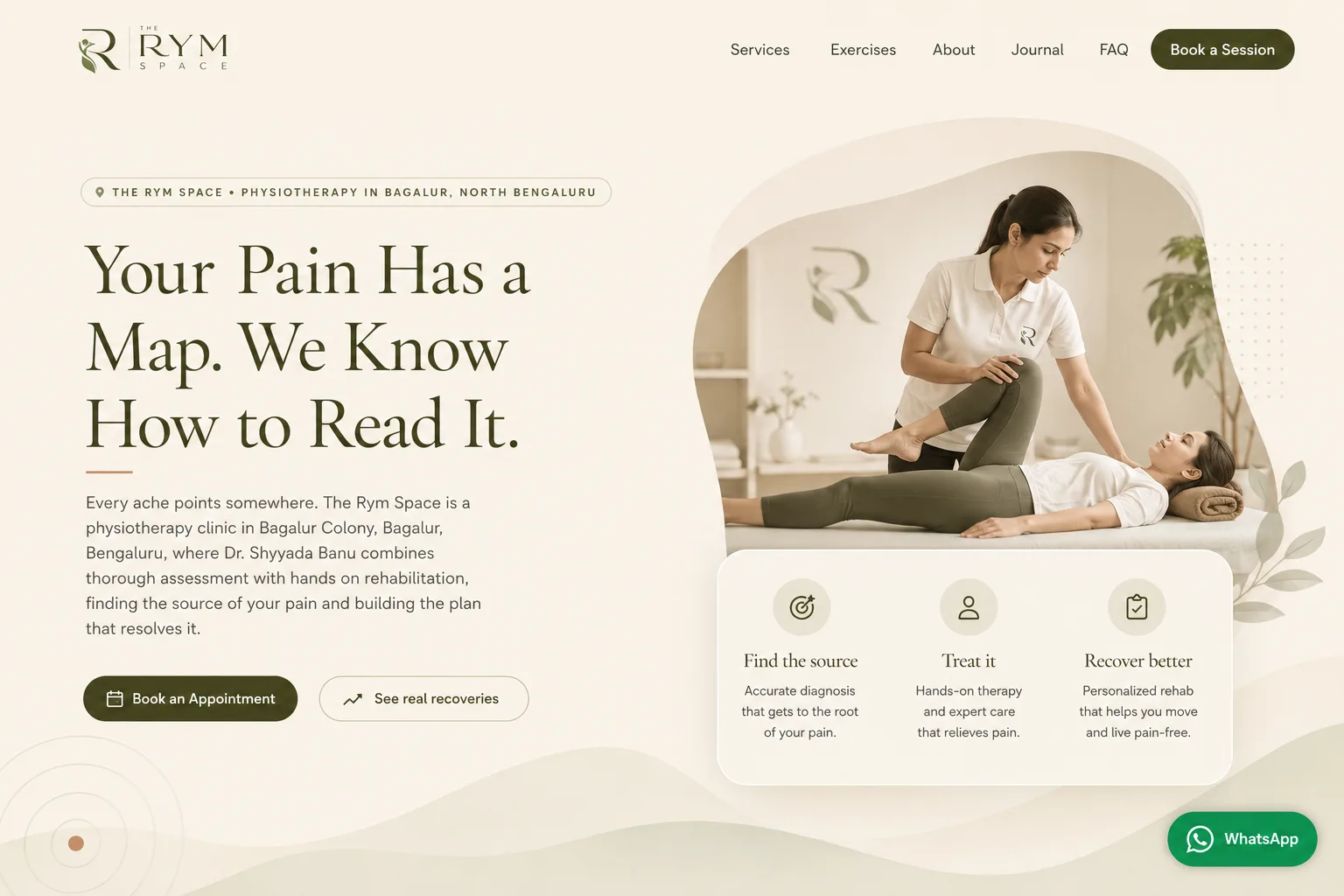
 Client website
The Rym Space
Website for a physiotherapy clinic in North Bengaluru: services, conditions treated and bookings, built to load fast and rank locally.
- Next.js
- TypeScript
- Tailwind CSS
- MDX
- +1
Hearing care ERP running daily across clinic locations: patients, appointments, audiograms, hearing aid fittings, inventory, invoicing and reports in one system.
Built with
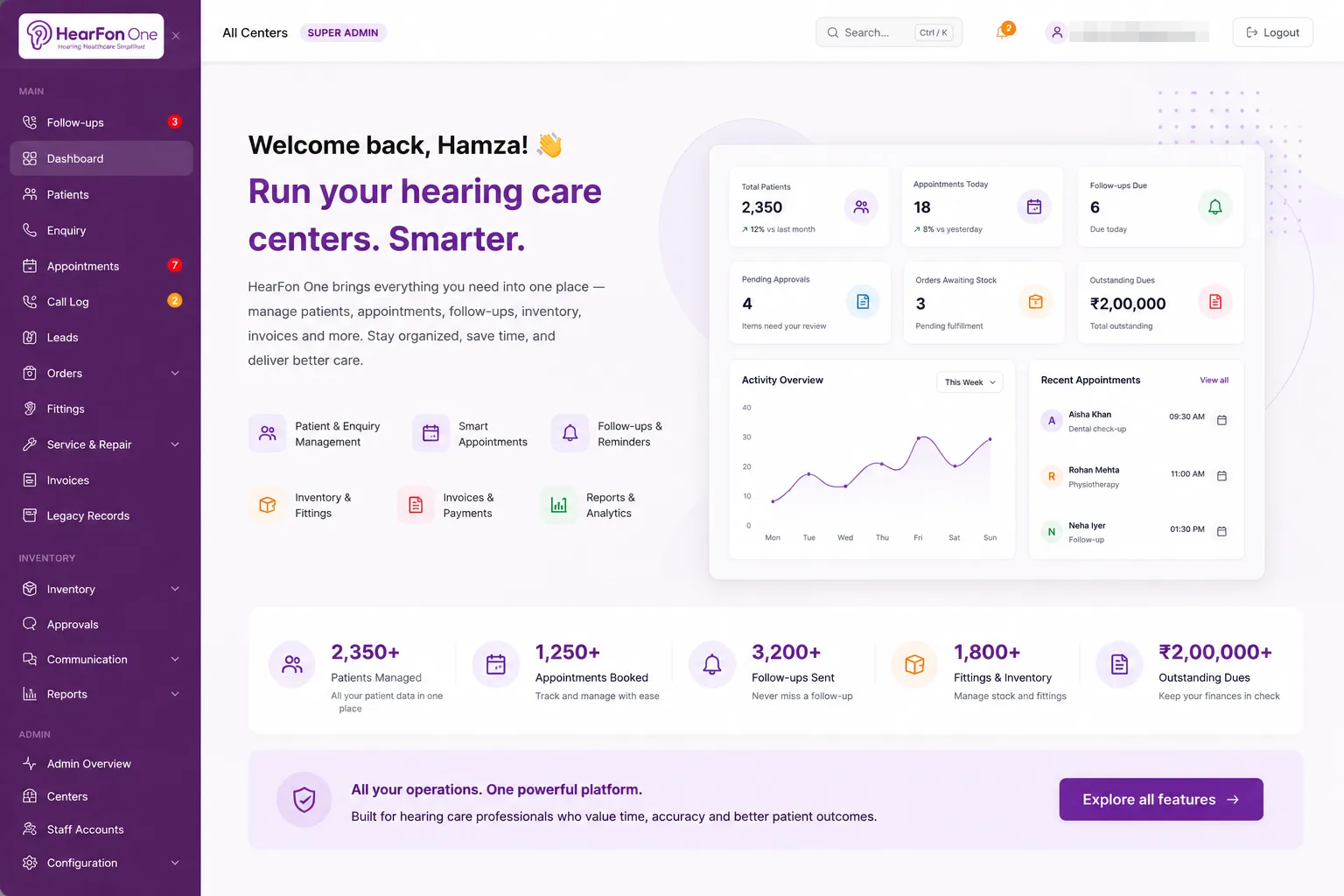
Hearfon Systems is a full ERP for a hearing care business, built around how their clinics actually run rather than how generic practice software assumes they run. It is in daily production use across multiple locations.
HearFon is an audiology and hearing health provider running a network of clinics across Bangalore, with three decades in hearing care. Their work spans the full journey: hearing tests and diagnosis, infant screening, hearing aid prescription and fitting, cochlear and BAHA implant support, and ongoing repairs and aftercare.
That breadth is exactly why off the shelf practice software did not fit. A clinic that fits hearing aids carries stock, places supplier orders and services devices for years after the sale, which makes it as much a distribution and service business as a medical one. Alongside the ERP, I also look after their public website at hearfon.com.
The system replaces the usual patchwork of spreadsheets, paper forms and disconnected apps with one place where the whole patient journey lives:
Every user signs in with a role and a home clinic, and sees exactly what their role allows: front desk staff work their own clinic's diary, while management sees across locations. Row-level security in the database enforces that separation rather than trusting the interface to hide things.
It is the clearest example of the approach described in custom software vs off the shelf: the workflow is the product, and the software fits the business rather than the other way round.
Live and in daily use. As a client system it does not have a public URL, but I am happy to walk through it on a call.
Client websiteWebsite for a physiotherapy clinic in North Bengaluru: services, conditions treated and bookings, built to load fast and rank locally.
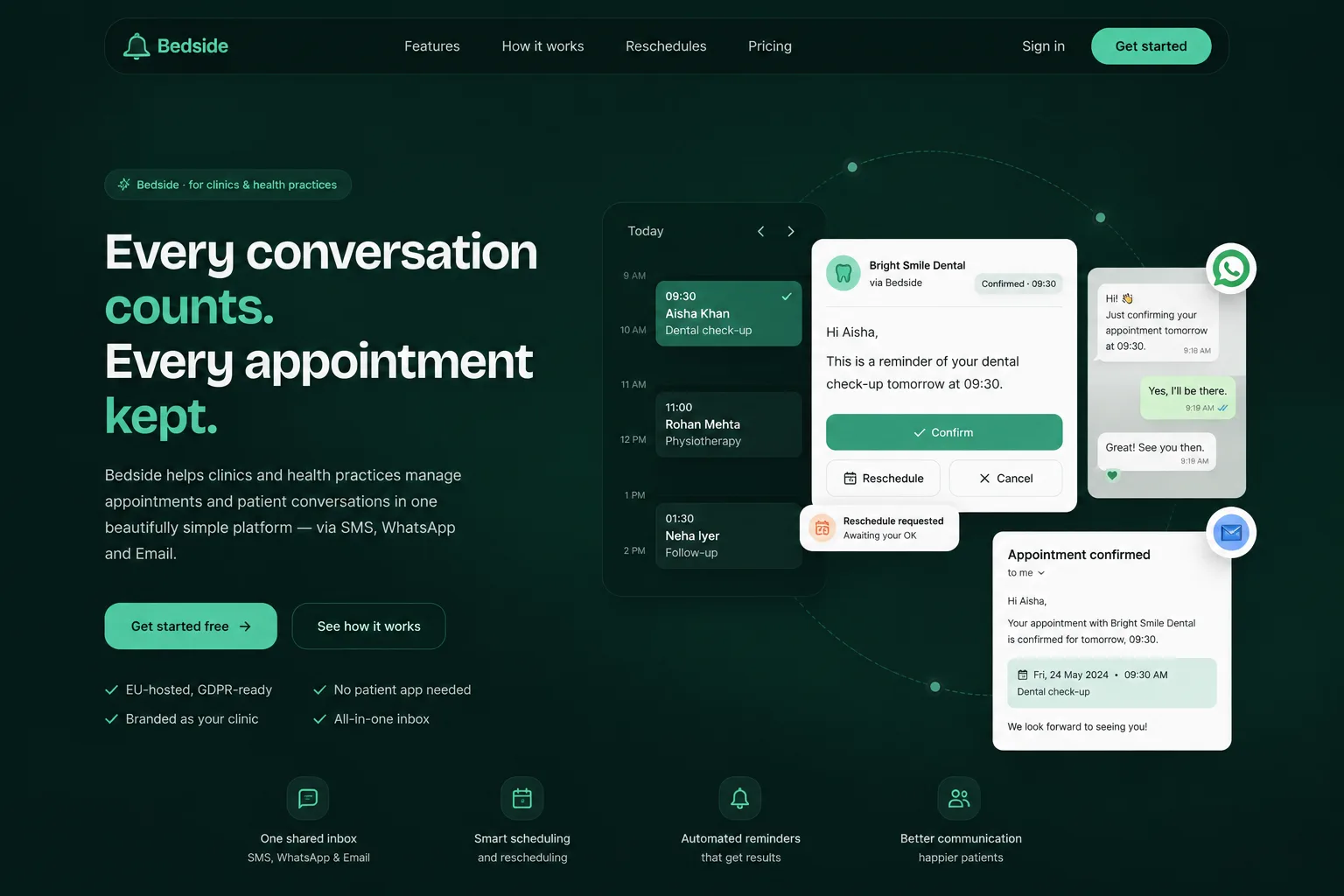 Product
Appointment reminders for clinics. Cuts no-shows with scheduled nudges and one-tap confirm, cancel or reschedule, no patient login needed.
 Open source
An open index of 8,000+ studies behind 50 contested health questions. Every study scored for methods and transparency, with its funders named.
Everything here started as a conversation about a workflow that was not working. A fifteen-minute call is enough to tell whether yours is worth building for.
Book a call